International Desk //
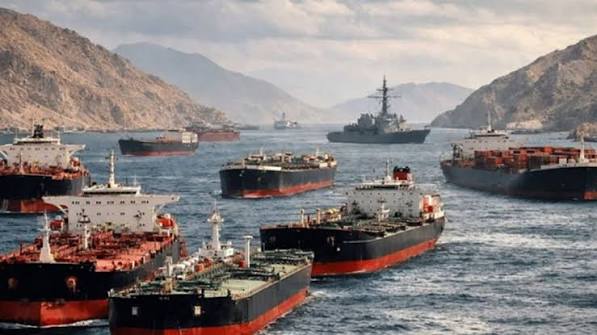
File photo. The ongoing conflict between the United States and Iran has reached a new level of intensity. This month-long confrontation has now spread to maritime routes. Tensions have particularly escalated due to tit-for-tat military actions by both nations surrounding the Strait of Hormuz, one of the world’s most critical energy transit routes.
Over the past 24 hours, the US and Iran have launched attacks against each other. The US claimed to have attacked three Iranian oil tankers. In retaliation, Iran fired ballistic missiles targeting US Navy vessels stationed near the Strait of Hormuz.
US Central Command (CENTCOM) stated that its forces attacked three Iranian vessels: one near Kharg Island, one near the port of Jask, and another in the Gulf of Oman.
The US claims that the Iranian missile attacks targeted a US aircraft carrier and a destroyer. However, US forces successfully repelled the attacks, and there were no military casualties.
Meanwhile, Iran’s Islamic Revolutionary Guard Corps (IRGC) claimed to have fired multiple ballistic missiles at US warships. Tehran also issued warnings to vessels navigating through the Strait of Hormuz.
**Reasons Behind the Attacks on Tankers**
The US alleges that the Iranian oil tankers are part of a covert network designed to sell oil while evading sanctions. Washington claims that the revenue generated from these sales funds the IRGC and its allied groups.
Conversely, Iran maintains that the US naval blockade and economic sanctions are strategies intended to exert pressure on the country. Tehran believes it is necessary to take countermeasures to protect its oil exports and maritime operations.
Approximately 20 percent of the world’s oil supply passes through the Strait of Hormuz. Prior to the conflict, about 20 million barrels of oil transited this route daily. Consequently, the conflict in this region has sparked significant concern within global energy markets.
Due to the conflict, the price of Brent crude has risen to approximately $96.28 per barrel, up from $70 before the war began. Analysts fear that oil prices could climb further if the conflict drags on. Where is the conflict heading?
According to Sina Azodi, Director of the Middle East Studies Program at George Washington University, the recent tit-for-tat attacks between Iran and the United States signal an escalation of the conflict. He believes neither side is likely to back down easily at this stage. Without a political solution, the confrontation could drag on, increasing the risk of civilian casualties.
Azodi further notes that while the US might deploy additional troops, Iran is likely to ramp up counter-pressure by attempting to circumvent the blockade. Ultimately, the side better able to withstand the resulting damage and pressure will hold the advantage.
Meanwhile, Ali Akbar Dareini, an analyst at Tehran’s Center for Strategic Studies, suggests that a US attack on an Iranian oil tanker would embolden Tehran to seek harsher retaliation. He predicts that alongside facing US sanctions and a naval blockade, Iran will attempt to break the blockade and could even try to drive oil prices above $100 per barrel.
The ongoing tension surrounding the Strait of Hormuz is emerging as a major challenge not only for the Middle East but for global energy security and the world economy.
Stay tuned for regular updates and share your views.
Please Share This Post in Your Social Media