Special Correspondent //
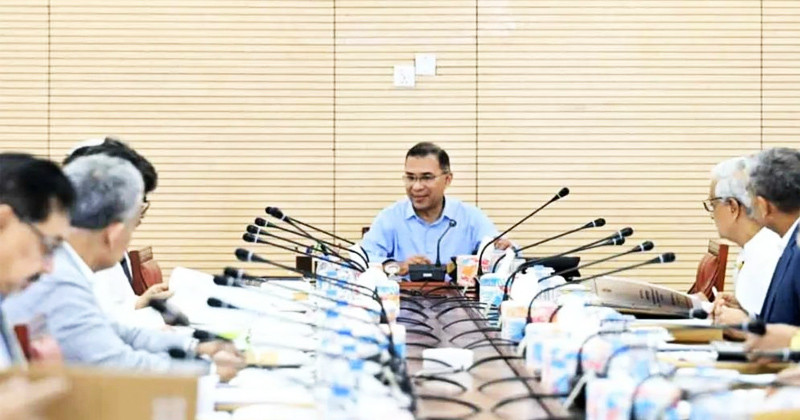
The government has undertaken an initiative to provide medical treatment and nutritional support to patients in order to combat tuberculosis (TB) and HIV/AIDS across the country. Simultaneously, similar medical care and support will be provided in ten districts at risk of malaria. A project proposal to this effect will be presented today at the meeting of the Executive Committee of the National Economic Council (ECNEC). Prime Minister and ECNEC Chairperson Sheikh Hasina will preside over the meeting.
It has been reported that the Directorate General of Health Services (DGHS) has launched a project titled “Integrated Health System Response to Fight Against TB, HIV, and Malaria in Bangladesh” to expand services for controlling HIV, TB, and malaria, as well as to facilitate disease detection and provide nutritional support to patients. The estimated cost of the project is approximately Tk 4,039 crore. Of this amount, Tk 3,169 crore will be funded by the government, while the development partner organization, The Global Fund, will provide a grant of Tk 870 crore. Under the project, medical supplies worth Tk 1,430 crore and medicines and vaccines worth Tk 959 crore will be procured. Upon approval, services will be provided over a three-year period from 2027 to 2029.
According to the DGHS, the project aims to identify and bring 987,718 patients under treatment over the three-year span. Additionally, TB preventive treatment will be administered to 1.5 million individuals who have come into contact with TB patients, and nutritional support will be provided to 824,450 TB patients. The project includes the establishment of an HIV testing center at the main hospital in each of the 64 districts, where 17,700 HIV-positive patients will receive treatment. Furthermore, medical care and nutritional support will be provided to 3,760 individuals living with HIV patients, including 3,000 children. While services for TB and HIV patients will be available nationwide, specific medical care and support related to malaria will be provided in the ten districts at risk of the disease. Services will continue in malaria-prone areas, including Mymensingh, Sherpur, Netrokona, Kurigram, Sylhet, Moulvibazar, Sunamganj, Chattogram, and Cox’s Bazar. The goal is to bring the number of malaria cases in the country down to zero by 2029.
While outbreaks of measles and dengue have recently risen in the country, deadly diseases like tuberculosis and malaria persist. Meanwhile, HIV cases are silently increasing, even though the situation has not yet reached epidemic proportions. According to the Directorate General of Health Services (DGHS), 1,891 new HIV infections were detected in 2025—an increase of 453 cases compared to the 1,438 detected in 2024. However, under a new project, 9,400 HIV-infected individuals undergoing treatment will receive nutritional support of Tk 820 per month for one year.
Dr. Khairuzzaman, Director (HIV) at the DGHS, outlined a plan to identify and bring 95 percent of HIV patients under treatment within the next three years. He stated, “To prevent HIV from spreading to the grassroots level, this initiative involves testing and treating suspected cases starting from the union level. Initially, individuals suspected of infection at the union level will be referred to Upazila Health Complexes. After screening there, those testing positive for HIV will be sent to district hospitals. Following further testing at district hospitals, patients will be referred to 17 medical college hospitals across the country for treatment. Our goal is to bring 95 percent of the population at risk of HIV under testing coverage.”
Regarding the overall initiative, Professor Dr. Fowara Tasneem, Additional Director General (Planning and Development) of the DGHS, said, “This project is being implemented to prevent tuberculosis and HIV and to eliminate malaria through testing facilities in all districts and upazilas. To this end, a dedicated testing service center will be established in each district hospital to conduct tuberculosis and HIV tests. For malaria, testing and services will be provided in the ten most at-risk districts. The project will be funded jointly by the Global Fund and the government.” “For HIV, icddr,b is our partner. Our goal is to completely eradicate malaria, reduce the prevalence of tuberculosis, and halt the spread of HIV. Patients will be diagnosed at the Upazila level and subsequently treated at district hospitals.”
16 Projects to be Placed Before ECNEC: The government’s ninth ECNEC meeting is scheduled to be held today in the Cabinet Room at the Secretariat. Sixteen projects, with a total estimated cost of approximately Tk 17,868 crore, will be presented at the meeting. These include proposals for nine new projects, five revised projects, and two projects seeking an extension of their tenure.
Please Share This Post in Your Social Media