Sources – The Economist, Reuters and AFP //
The silence was unbearable. Just after noon on September 28, 24 hours passed since the Israeli bombing of Hassan Nasrallah, the top leader of the Iran-backed armed group Hezbollah, in Lebanon. Israel announced that Nasrullah was dead that morning. But Hezbollah is largely silent. But the organization did not comment on the attack on Hezbollah’s headquarters in Beirut or the fate of Nasrullah. Hizbullah’s media was also left speechless. Hezbollah confirmed the death of Nasrullah around 2:30 am.
But by then, Israeli warplanes were circling the skies over Lebanon and continuing to bomb various locations. Israel claimed that they destroyed Hizbullah’s rockets, missiles and war equipment by carrying out that attack. Israel says it wants to destroy all of Hezbollah’s equipment as quickly as possible before it regroups.
The morning after Nasrullah was killed, Hezbollah fired more than 12 rockets at Israel. But there was no change. Meanwhile, chaos arose within Hezbollah. But how Hezbollah will take revenge, it is not possible to imagine now. Because, the current leaders of Hizbullah have not yet decided what would be the right answer to Israel. In the meantime, the Israeli forces have started massive air strikes and ground operations in Beirut, Lebanon. However, Hezbollah has claimed to build resistance in some places.
After the death of Hezbollah leader Nasrullah, there will be major changes in Lebanon and the Middle East, it can be said now. This change was unthinkable even a year ago. This change has already started to be seen. For a long time, the fear of the conflict spreading throughout the Middle East has come true. Israel was attacked by missiles in revenge for the killing of Nasrullah and Hamas leader Ismail Haniyeh by Iran. Israel has threatened a tough response.
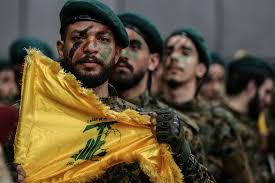
Hezbollah joined the conflict that started after Hamas attacked Israel on October 7 last year. They started firing rockets into northern Israel in solidarity with Gaza. Nasrullah thought he might survive a limited border conflict. But it remained an unwritten rule until July 27. Among them, 12 children were killed in Hezbollah’s rocket attack. Israel threatened to retaliate.
In the meantime, Israeli operations in Gaza were decreasing. Israeli Prime Minister Netanyahu did not miss this opportunity. He changed the policy of war with Hezbollah. Hezbollah’s military chief Fouad Shokar was killed. This attack was just the beginning of a major Israeli attack. Then in mid-September explosions occurred on pagers and walkie-talkies used by Hezbollah as a means of communication. In addition, Israel started airstrikes targeting various Hezbollah installations.
Two days before the killing of Nasrullah, Israel started making various plans. Israeli leaders authorized the attack when they were sure Nasrullah had arrived at headquarters for talks. This attack is the result of their 18 years of planning. Earlier in 2006, there was an attempt to kill him.
Nasrullah’s possible successors include his assistant Naeem Kashem and executive council member Hashem Safiuddin. There may be questions about the 71-year-old Kashem’s credibility as a leader. So Safiuddin is a possible candidate. He is at least 10 years younger than Kashem. He is Nasrullah’s cousin and close to Iran. He is the brother-in-law of Iranian general Qassem Soleimani, who was killed in a US attack.
Israel also attacked to kill this Safiuddin. A video message from Netanyahu’s office said they further reduced Hezbollah’s capabilities. They have killed thousands of Hezbollah members. Nasrullah is among them. There is his successor. There are even successors of this successor. As strong as Hezbollah was for many years, today it is weaker than it was.
Whoever takes charge of Hezbollah faces the most uncertain moment in Hezbollah’s four-decade history. In the span of two months, Israel not only eliminated Hezbollah’s leadership, but also wiped out the organization’s long experience. In addition, it defamed Hezbollah in front of the Lebanese people. Hizbollah is in great trouble to have a major influence on Lebanese politics.
Hezbollah has long served as a trusted ally of Iran. The group played an important role in supporting the bloody regime of Bashar al-Assad in Syria. In addition, they have trained Iranian-backed Iraqi and Yemeni militias. So it is natural to react to Nasrullah’s death among some groups in Arab countries. But the Gulf countries have kept their mouths shut.
It is normal for Iran to respond to the service that Nasrullah has given to Iran. Apart from this, the killing of the Hamas leader who was a guest in Iran has also angered Iran. Apart from this, there is also the matter of protecting the face of the country’s leaders in front of the Iranian people. The ultra-conservatives there have been pressuring Iran to respond appropriately. But there is also fear in Iran, Israeli char is among them.
Iran’s Supreme Leader Ayatollah Ali Khamenei has already been evacuated to a safe place. Apart from this, Iran’s President Masoud Pezeshkian counter-threatened the threat of Israeli attack. He said, if Israel attacks, there will be a strong response.
Over the past few weeks, Iran has been increasing its security policy and diplomatic relations. The country’s foreign minister, Abbas Aragchi, is visiting various countries in the Middle East. Visited Saudi Arabia after visiting Qatar, Lebanon and Syria. He discussed with Crown Prince Mohammed bin Salman during his visit to Saudi Arabia.
Political relations with top oil exporter Saudi Arabia have improved in recent years with Tehran, helping ease regional tensions. Iran has urged Middle Eastern countries not to use its airspace for Israeli strikes.
Israeli Prime Minister Benjamin Netanyahu discussed the attack on Iran with US President Joe Biden. He said, Israel is adamant about attacking Iran. Reuters reports that Israel is planning to attack Iran’s military and nuclear facilities. However, Iran has informed its ally, the United States, that Iran will retaliate.
In the meantime, Iranian President Masoud Pezheshkian has discussed with Russian President Putin. Putin reassured Pezeshkian. Russian President Vladimir Putin said relations with Iran are a major priority for Moscow. The positions of the two countries are almost the same in terms of global events.
The White House is concerned about the closeness between Tehran and Moscow. The US accuses Iran of providing ballistic missiles to Russia in the Ukraine war. Tehran has always denied the allegations.
But everything in Iran depends on the supreme religious leader Khamenei. Khamenei has long avoided bringing up the issue of nuclear capability. But recent events may encourage Iran to change its mind. However, if he does not walk on this path, he will have to look back at his age. Now he is 85 years old. So his decision will not work all the time, it should be kept in mind.
Iran once relied on Hezbollah to protect its nuclear facilities. But now, in the troubled situation of Hezbollah, that protection of Iran’s nuclear facilities may collapse.
An Arab official compared the Israeli attack on Hezbollah to the Six Day War of 1967. At that time, the confusion about the power of Hezbollah was over in an instant.
Egypt’s charismatic leader Jamal Abdel Nasser built a narrative of his own power. But in 1967 the Israeli attack broke his mistake. His power could not withstand the Israeli attack. Egypt never recovered their honor.
Nasrallah has long served as the axis of resistance to Iran-backed armed forces. He said, there is unity among Hezbollah and they are strong enough. But Israel has been cracking down on Hezbollah members for weeks. Efforts are being made to defuse tensions after Iran responded with missile strikes.
However, after several days of fighting, it is clear that it is not easy for Israel to wipe out Hezbollah. Because Hezbollah has thousands of armed members, an arsenal of long-range missiles, and a base of popular support. However, the army of armed fighters that will be formed after this fight with Israel will be different from the previous Hezbollah.
Sources: The Economist, Reuters and AFP
Please Share This Post in Your Social Media