Sports Desk //
The Pakistan Cricket Board (PCB) hosted the last Champions Trophy. India refused to play in the country. The ICC has fixed the venue for all India’s matches in Dubai, United Arab Emirates.
After the complications over the venue of the Champions Trophy, the two arch-rivals India and Pakistan have reached an agreement. Due to which the Pakistan cricket team does not have to go to India to play the upcoming T20 World Cup. Their matches will be played in Sri Lanka.
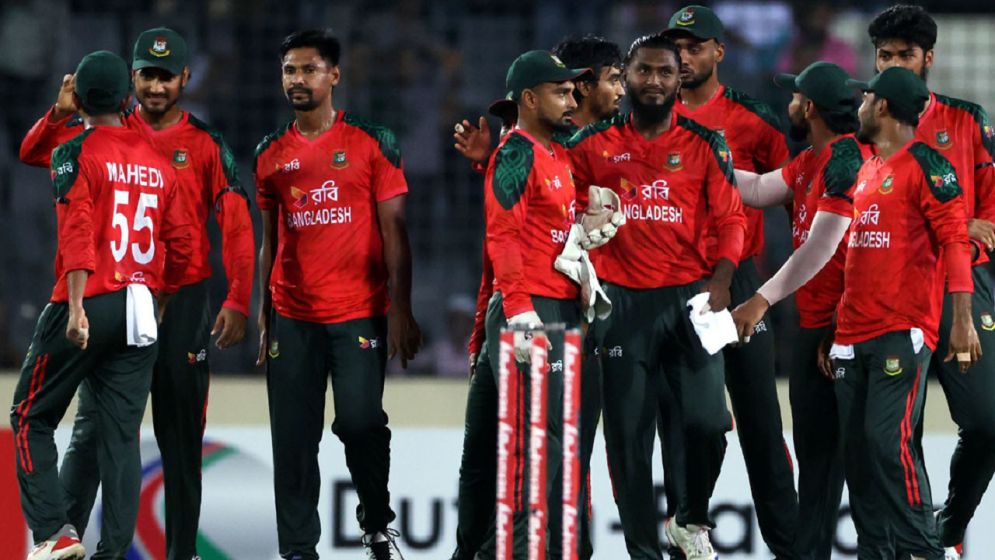
Bangladesh has come into the limelight again amid the India-Pakistan tension. The reason for this, of course, is around the IPL. After Mustafizur Rahman was dropped from the IPL due to threats from extremists, the BCB decided not to play the World Cup in India.
The ICC has made it clear that Bangladesh will have to go to India to play the World Cup. On January 22, Bangladesh decided not to go to India to play the World Cup. If the venue changes, it will play in Sri Lanka.
The International Cricket Council (ICC) rejected Bangladesh’s proposal to change the venue and gave Scotland the opportunity to play the World Cup instead.
The website of the popular magazine Wisden describes these two incidents and says that now the question arises whether fairness in international cricket is conditional at all. India had three months to inform their decision; on the other hand, Bangladesh had only one month after the schedule and group were announced. Can the time difference alone justify the ICC’s ‘double standard’?
Their report also says that can India’s role in creating the crisis be ignored in sending a political message around Mustafizur Rahman? The BCCI never mentioned security as the reason for dropping Mustafiz. ‘Recent circumstances’ was the only explanation.
India used its administrative power to send a political message through cricket. While Bangladesh stood by their players, they took a hard line on issues of self-respect and policy and openly threatened them. As a result, Wisden believes that it has become easier for the ICC to say no.
On the other hand, India knows that the ICC tournament is almost unviable without them due to their economic power and superstars. So they were able to impose their will by refusing to go to Pakistan. The balance of power was heavy on India from the beginning, which shows how power, especially economic power, can bend the decision in their favor.
Bangladesh did not have that ability. As a result, they had to pay the price for a decision that they did not even think about three weeks ago. They were in the tournament; now they are not. Just because they stood up for themselves.
One thing is clear from this analysis by Wisden, the ICC is now busy appeasing India, leaving aside the standards of ethics or fairness. Because of their economic power, they can get any decision passed by the ICC and most of its member countries. The only solution for a ‘cricket-crazy’ country like Bangladesh is to stand up in the face of such aggressive or totalitarian behavior.
Stay connected with regular news.
Please Share This Post in Your Social Media